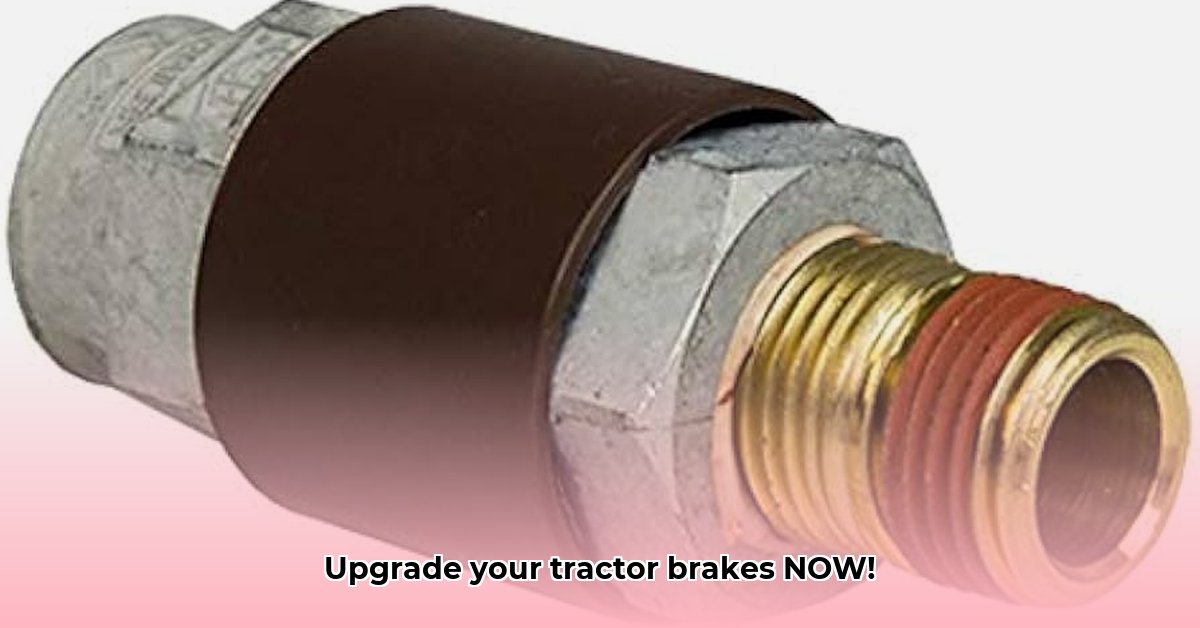
Understanding Tractor Quick Release Valves: The Air Brake's Best Friend
Your tractor's air brakes are crucial for safe operation, especially with heavy loads. The quick release valve (QRV) is a key component, controlling the speed at which air pressure is released from your trailer brakes. A slow release leads to longer stopping distances and increased wear on your braking system. A well-functioning QRV ensures faster, more efficient braking, protecting your equipment and enhancing safety. Think of it as a precisely controlled release of the brake's grip. For more on tractor hydraulics, check out this resource on tractor pressure gauges.
Choosing the Right Valve: Factors to Consider
Selecting the appropriate QRV involves considering several crucial factors:
Mounting Location: QRVs can mount directly to the gladhand (the air connection) or between the gladhand and the tractor's protection valve. Location impacts installation ease and might slightly affect air release speed. Consider your existing setup to make an informed choice.
Flow Rate: This dictates how quickly the valve releases compressed air. A higher flow rate translates to faster braking response. Always refer to the manufacturer's specifications; flow rates vary significantly between models.
Port Size: This must precisely match your existing air brake system for proper functionality. A mismatch results in poor performance or complete failure. Double-check compatibility before purchasing.
Durability: Investing in a heavy-duty valve is often cost-effective in the long run. A robust valve minimizes downtime and costly repairs. Think of it as insurance for your braking system.
Popular Valve Types: A Quick Comparison
While many excellent QRVs exist, let’s compare two common types to illustrate key differences:
One type, comparable to a Tectran 80-1094, often sits between the gladhand and protection valve, potentially simplifying integration for certain setups. Its precise flow rate may not be prominently advertised, so comparing it directly to other valves requires a deeper dive into the technical specifications.
Another popular alternative, similar to an RGT4000-6, mounts directly to the gladhand, often resulting in faster installation. Its specifications might include a flow rate—for instance, 9.0 SCFM (forward) and 8.0 SCFM (exhaust) at 2 PSI. Focus on comparing relevant specifications when choosing a replacement.
The Upsides and Downsides of an Upgrade
Upgrading your QRV offers significant advantages, but it’s essential to weigh the pros and cons:
| Feature | Advantages | Disadvantages |
|---|---|---|
| Brake Release Speed | Quicker stops, improved safety, shorter stopping distances | Higher initial cost |
| Component Longevity | Reduced wear on brake components, potentially lowering maintenance costs | May not significantly impact systems rarely engaging heavy brakes |
| System Efficiency | Smoother braking, less stress on the entire system | Needs proper installation and regular maintenance |
| Safety Boost | Faster response time—critical in emergencies | Valve failure can disrupt braking; regular inspections are vital |
Getting It Done Right: Installation and Maintenance
Upgrading your QRV is relatively straightforward, provided you follow these steps:
Safety First: Always disconnect the air supply before any work on the braking system to prevent accidental activation and injury.
Pre-Installation Check: Inspect the new valve for damage before installation. A faulty valve is dangerous.
Follow Instructions: Adhere strictly to the manufacturer's instructions for your specific valve model.
Thorough Testing: After installation, fully test the braking system and ensure everything functions smoothly and safely before operating.
Regular Maintenance: Regular inspection and preventive maintenance are critical for extending the valve’s lifespan and ensuring consistent performance and safety.
Investing in a high-quality QRV results in improved braking efficiency, heightened safety, and reduced long-term costs. By carefully considering the factors outlined, you can confidently choose a valve that aligns with your needs, enhances your tractor’s performance, and increases safety. Remember, a well-maintained braking system is paramount for safe and productive operation.
Tractor Quick Release Valve
Content about tractor quick release valve (Auto-generated fallback due to API error).